This encryption algorithm does not need any public key and private key, which is more convenient to use. Moreover, unlike hash algorithm, symmetric encryption and decryption can be two-way inverse operation. Encryption and decryption is an important means to ensure communication security. Now there are many encryption algorithms, and mature software packages can be used, which greatly reduces the burden of application development programmers. You only need to use the encryption and decryption libraries provided by these third parties.

In node JS actually provides a very powerful and convenient encryption and decryption module crypto. We can realize simple encryption and decryption functions without using a third-party NPM library. For certain kinds of applications, however, you may wish to have an additional layer of security between your host application and your cloud app. To enable this extra layer of security, the Notecard supports end-to-end encryption of your data. Using an AES-256 symmetric algorithm based on an RSA public key you specify, the Notecard can encrypt every Note added by your host. Encrypted Notes are then synched to Notehub, where they can be routed to your cloud application for decryption using your RSA private key.

Asymmetric-key cryptography was introduced to overcome the security concerns of symmetric-key cryptography. It uses a pair of keys, instead of one, called the public key and private key. You can't use the public key to decrypt data encrypted with it or vice versa. Node.js provides a built-in module called crypto that you can use to encrypt and decrypt strings, numbers, buffers, streams, and more.

This module offers cryptographic functionality that includes a set of wrappers for OpenSSL's hash, HMAC, cipher, decipher, sign, and verify functions. Just pass the buffer in place of the string when you call the function and it should work. You can also pipe the streams in to the encrypt function to have secure encrypted data passing through the streams. I hope the samples help you to get started with nodejs encryption. Asymmetric encryption is used on the web whenever you use HTTPS to establish an encrypted connection to that website. The browser finds the public key of an SSL certificate installed on the website, which is used to encrypt any data you send, then the private key decrypts it.

The above code will create a file called safe.dat that will be encrypted using the passphrase provided. The JavaScript object will be asynchronously encrypted and then decrypted after. The file will remain present on the hard drive in the end. You just saw how to encrypt and decrypt data with the Node.js Crypto library. The Crypto module was added to Node.js before there was the concept of a unified Stream API, and before there were Buffer objects for handling binary data. As such, the many of the crypto defined classes have methods not typically found on other Node.js classes that implement the streamsAPI (e.g. update(), final(), or digest()).

Also, many methods accepted and returned 'latin1' encoded strings by default rather than Buffers. This default was changed after Node.js v0.8 to use Buffer objects by default instead. The crypto module authorizes you to hash plain texts before storing data in a database. Hashed data can not be decrypted with a specific key, like encrypted data. Instead, an HMAC is responsible for a Hash-based Message Authentication Code, which hashes keys and values to create a final hash. As stated earlier, crypto is a built-in library in Node.js.

Thus it doesn't require installation and configuration before using it in your Node.js applications. The crypto module handles an algorithm that performs encryption and decryption of data. Crypto allows you to hash plain texts before storing them in the database. For this, you have a hash class that can create fixed length, deterministic, collision-resistant, and unidirectional hashes. For hashed data, a password cannot be decrypted with a predetermined key, unlike encrypted data.
An HMAC class is responsible for Hash-based Message Authentication Code, which hashes both key and values to create a single final hash. In the Internet age, the amount of data on the network is growing at an alarming rate every day. At the same time, various network security problems emerge one after another. The purpose of crypto module is to provide general encryption and hash algorithms. It's not impossible to implement these functions with pure JavaScript code, but it will be very slow. After Nodejs implements these algorithms in C/C + +, it is exposed as a JavaScript interface through the module cypto, which is convenient to use and fast to run.
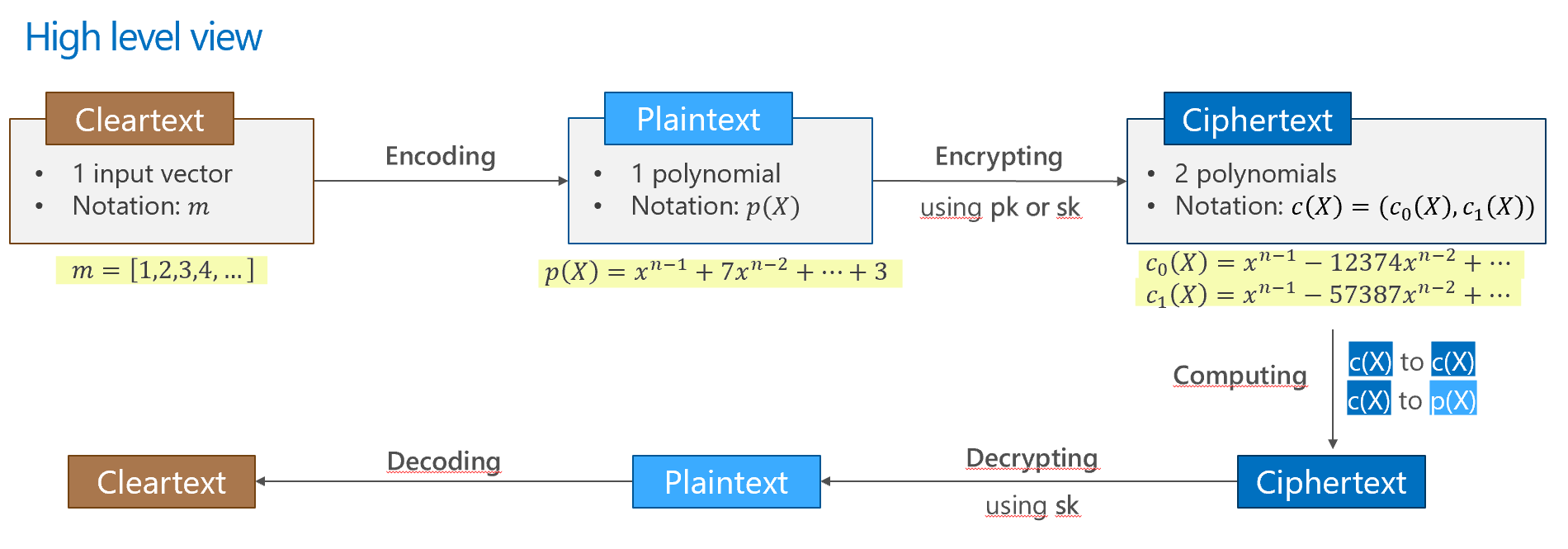
Thus as a node.js developer, you should understand how to encrypt and decrypt data to secure data processed by your system. Node.js has a built-in library calledcryptofor data encryption and decryption. Using a shared key works for encryption works, but the problem is that both parties must agree upon the key.

This is problematic in the real world because it's not practical or secure to share across a network. The solution is to use an algorithm like RSA that generates a keypair containing a public and private key. As their names indicate, the private key should be kept secret, while the public key can be shared freely.

The public key is Pub, the private key is Piv, the asymmetric encryption algorithm is Encrypt, and the asymmetric decryption algorithm is Decrypt. To decrypt data, we use the Decipher class of the crypto module. It is implemented similar to the way data encryption was implemented. We create a new encryption key using the secret and then begin decrypting the cipher with the key. When creating a new cipher object, we pass a parameter called an initialization vector .

It is usually added to the ciphertext without going through an encryption process. It is used to avoid repetitions in the ciphertext so that attackers are not able to decipher data by identifying patterns in the encrypted data. Therefore, IVs should always be unpredictable and unique. For this reason, this implementation generates a new IV using the randomFill function. The outputs of ciphers, hash functions, signature algorithms, and key derivation functions are pseudorandom byte sequences and should not be used as Unicode strings.

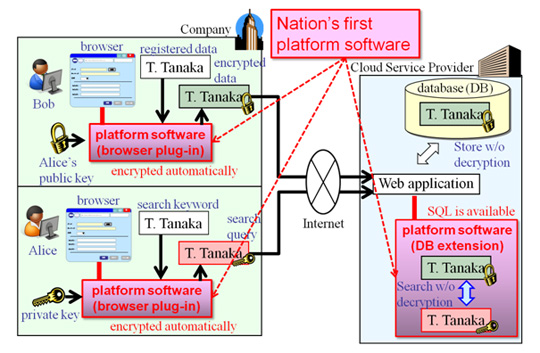
Because public keys can be derived from private keys, a private key may be passed instead of a public key. Node.js has a built-in library called crypto for data encryption and decryption. With cryptography in Node.js, you can hash passwords and store them in the database so that data cannot be converted to plain text after it is hashed; it can only be verified. When malicious actors get ahold of your database, they cannot decode the encrypted information.
You, can also encrypt other user data so that it can be decrypted during transmission. In this tutorial, we'll go over the basics of cryptography in Node.js and demonstrate how to use the Node.js crypto module to secure user data. We'll build a sample app to demonstrate how to encrypt and decrypt usernames and passwords in Node.js using crypto. Encryption and Decryption are basically used for security purposes.

We convert our actual data in some other form using some algorithms sha, RSA,etc during encryption. Vice versa we convert our encrypted data into actual forum during decryption. Pass in the decryption keyring that you just created and the encrypted message that the encryptfunction returned . The AWS Encryption SDK uses the keyring to decrypt one of the encrypted data keys.
Then it uses the plaintext data key to decrypt the data. To decrypt the data, pass in the encrypted message that the encryptfunction returned. The encrypted message includes the encrypted data, the encrypted data keys, and important metadata, including the encryption context and signature. This is very useful if you need to encrypt sensitive data in a file for a local application.
When encrypting with the crypto module, we have the option to generate a new key every time the encrypt method is called. Using different keys for encryption makes it harder for attackers to decipher data using brute force. Since the public key is useless in decryption, stealing the public key doesn't open the chance to read encrypted and private user data.

To encrypt and decrypt a message, we can use the createCipheriv() and the createDecipheriv() methods respectively in the crypto module in Node.js. We will share with you in this article how to encrypt and decrypt data in node.js using crypto. Node.js provides the in-built library crypto for data encrypt and data decrypt. You can do any cryptographic opration help of crypto library on any srting, buffer and stream. As you know that very well data security in very important in web applications. Encrypts the content of buffer with key and returns a newBuffer with encrypted content.

The returned data can be decrypted using the corresponding private key, for example using crypto.privateDecrypt(). Creates and returns a Hash object that can be used to generate hash digests using the given algorithm. For XOF hash functions such as 'shake256', the outputLength option can be used to specify the desired output length in bytes. The implementation of crypto.createDecipher() derives keys using the OpenSSL function EVP_BytesToKey with the digest algorithm set to MD5, one iteration, and no salt. The lack of salt allows dictionary attacks as the same password always creates the same key.

The low iteration count and non-cryptographically secure hash algorithm allow passwords to be tested very rapidly. Let us explore data encryption and decryption and implement Node.js applications using crypto. This article will help you learn how to use the Node.js crypto module to encrypt and decrypt data in your applications. An end party that receives encrypted data can decrypt it to plain text for their consumption.

Cybercriminals cannot decrypt encrypted data if they do not have the key. When developing encryption and decryption data, it is necessary to convert the encrypted byte array into a String object for network transmission. If the byte array is directly converted into UTF-8 and other coding methods, there must be some codes without corresponding characters . Errors will occur in the process of coding and parsing, and the information cannot be expressed correctly. At this time, it can be realized through the commonly used binary data coding method Base64 coding or Hex coding. Finally, we need somewhere within our project to add code.
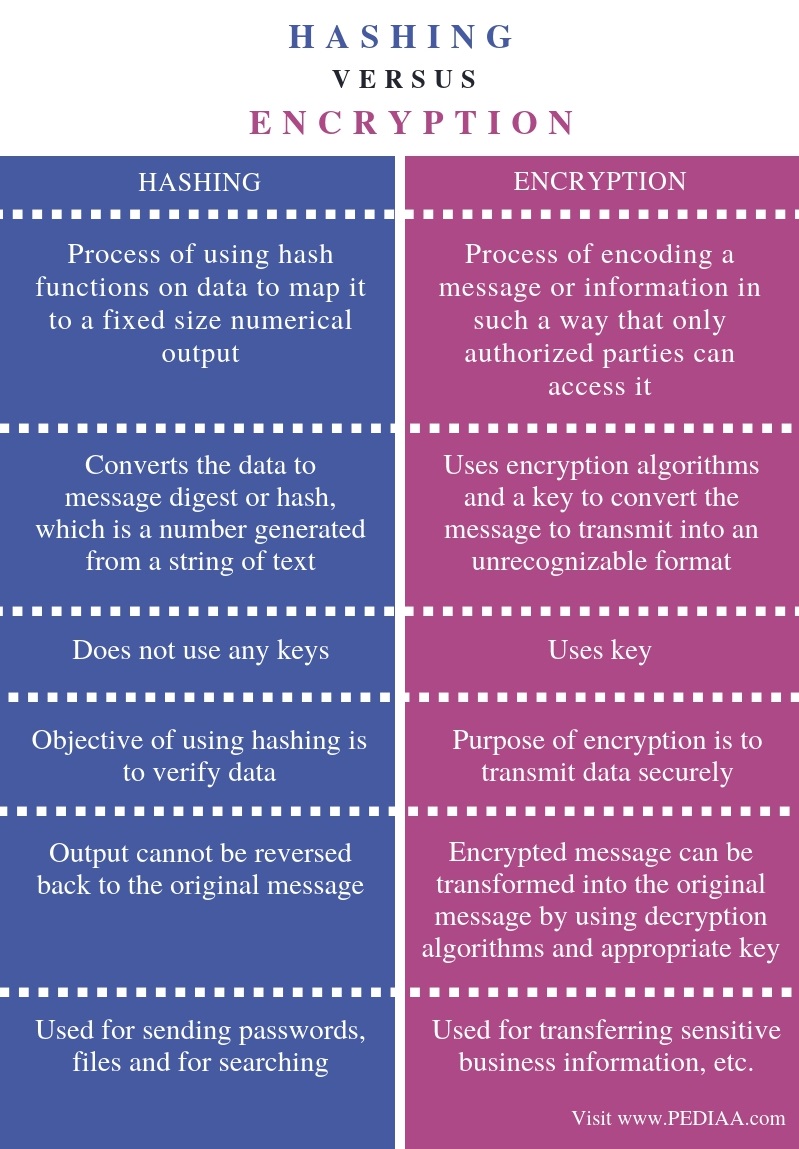
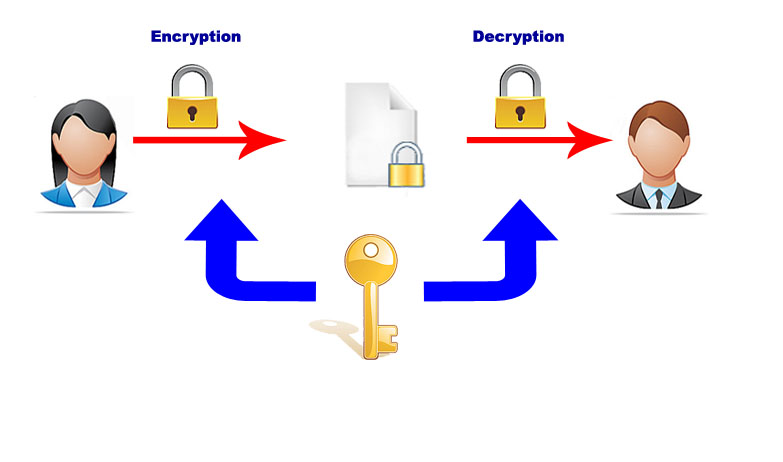
For project cleanliness, we're going to create a custom class for all encryption and decryption and a driver file that will instantiate our class. In an asymmetric key encryption scheme, anyone can encrypt messages using a public key, but only the holder of the paired private key can decrypt such a message. The security of the system depends on the secrecy of the private key, which must not become known to any other. The encryption context that was used to decrypt the data is included in the message header that the decrypt function returns. A mismatch might indicate that the data was tampered with, or that you didn't decrypt the right ciphertext. You must also specify an AWS KMS keyringwhen decrypting.

You can use the same keyring that was used to encrypt the data or a different keyring. To succeed, at least one AWS KMS key in the decryption keyring must be able to decrypt one of the encrypted data keys in the encrypted message. Because no data keys are generated, you do not need to specify a generator key in a decryption keyring. If you do, the generator key and additional keys are treated the same way. When encrypting with an AWS KMS keyring, you must specify a generator key, that is, an AWS KMS key that is used to generate the plaintext data key and encrypt it. You can also specify zero or more additional keys that encrypt the same plaintext data key.

The keyring returns the plaintext data key and one encrypted copy of that data key for each AWS KMS key in the keyring, including the generator key. To decrypt the data, you need to decrypt any one of the encrypted data keys. NodeJS has a library named bycryptjs that is used to encrypt and decrypt using some algorithms. This is very useful to store passwords and important credentials in the database as even the owner of the site cannot access the password or sensitive data. In the previous section, we discussed how encryption algorithms use keys when converting plaintext to ciphertext and vice versa. In symmetric-key cryptography, the key used for converting plaintext to ciphertext and the key used for converting ciphertext back to plaintext are the same.
This type of cryptography is simple to implement and faster than its counterpart, asymmetric-key cryptography. For historical reasons, many cryptographic APIs provided by Node.js accept strings as inputs where the underlying cryptographic algorithm works on byte sequences. These instances include plaintexts, ciphertexts, symmetric keys, initialization vectors, passphrases, salts, authentication tags, and additional authenticated data.

The implementation of crypto.createCipher() derives keys using the OpenSSL function EVP_BytesToKey with the digest algorithm set to MD5, one iteration, and no salt. PKCS#1, SEC1, and PKCS#8 type keys can be encrypted by using a combination of the cipher and format options. The PKCS#8 type can be used with anyformat to encrypt any key algorithm by specifying acipher. PKCS#1 and SEC1 can only be encrypted by specifying a cipherwhen the PEM format is used.
For maximum compatibility, use PKCS#8 for encrypted private keys. Since PKCS#8 defines its own encryption mechanism, PEM-level encryption is not supported when encrypting a PKCS#8 key. See RFC 5208 for PKCS#8 encryption and RFC 1421 for PKCS#1 and SEC1 encryption. When using block encryption algorithms, the Cipher class will automatically add padding to the input data to the appropriate block size. To disable the default padding call cipher.setAutoPadding. Our project's cipher function is made using createCipheriv(), the initialization vector from the crypto module.

The Node.js crypto module provides cryptographic functions to help you secure your Node.js app. It includes a set of wrappers for OpenSSL's hash, HMAC, cipher, decipher, sign, and verify functions. This cannot work if the passwords in the database — which are encrypted into gibberish — are used to compare the password/email the user inputs. That's why the credentials in the database have to be decrypted while comparing them to the user's input.

Passwords can either be hashed or encrypted; hashing is a one-way encryption method. This is very useful & secure when you need to encrypt sensitive data. For example, let's say we wanted to create an Register/login Application & want to save Username & Password. We could in this scenario & this to just remove all security issue. For example, let's say we wanted to create an Electron application and store sensitive information.

The private key can be used to decrypt any piece of data that was encrypted by it's corresponding public key. When verifying the encryption context, do not require an exact match. When you use an encryption algorithm with signing, the cryptographic materials manager adds the public signing key to the encryption context before encrypting the message.


No comments:
Post a Comment
Note: Only a member of this blog may post a comment.